
Introduction
Hip-hop has always been more than just music. It is a culture, a movement, and a powerful way to tell stories that connect generations. While modern rap continues to evolve with new sounds and production styles, many artists still believe that the soul of hip-hop lives in the raw beats and meaningful lyricism of the 1990s. That is exactly where Wu-Pledge finds its strength.
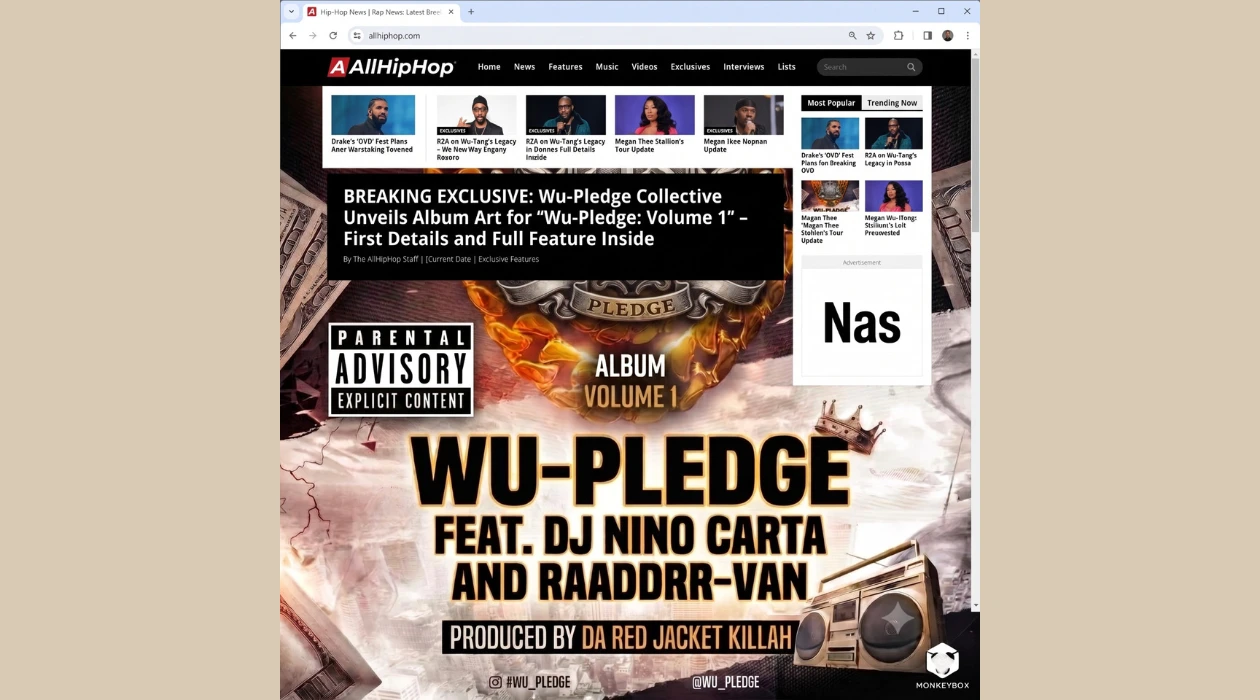
Created with authenticity at its core, Wu-Pledge captures the spirit of classic East Coast rap while delivering a fresh voice for today’s audience. Produced by the talented Da Red Jacket Killah, the track combines gritty boom-bap production with exceptional lyrical craftsmanship from Raaddrr-Van and DJ Nino Carta. The result is a song that feels timeless rather than nostalgic, proving that real hip-hop never goes out of style.
What Makes Wu-Pledge Stand Out?
At first listen, Wu-Pledge immediately transports listeners back to the golden age of hip-hop. The production avoids flashy trends and instead embraces everything fans love about classic rap. Heavy drums, dusty samples, and a rugged street atmosphere create a soundscape that feels both familiar and refreshing.
Rather than chasing commercial formulas, Wu-Pledge focuses on artistic integrity. Every beat, every rhyme, and every verse contributes to a cohesive experience that celebrates authentic hip-hop culture. It’s like stepping into a time machine while still keeping one foot firmly planted in the present.
The Production That Defines Authentic Hip-Hop
Behind every memorable rap song is a producer who understands how to build emotion through sound. Da Red Jacket Killah accomplishes exactly that with Wu-Pledge.
The instrumental is built on the unmistakable foundation of 1990s boom-bap. Heavy percussion drives the rhythm with confidence, while carefully selected dusty samples add warmth and texture. Instead of overwhelming the listener with unnecessary effects, the production leaves room for the lyrics to breathe.
This approach creates an atmosphere that feels raw, honest, and unmistakably authentic. It reminds listeners why classic boom-bap continues to influence artists across generations. The beat does not simply support the verses—it becomes another storyteller within the song.
Powerful Lyricism That Commands Attention
Great production deserves equally powerful lyrics, and Wu-Pledge delivers on that promise.
Raaddrr-Van showcases sharp multi-syllabic rhyme patterns that demonstrate both technical skill and creative storytelling. His delivery is confident, focused, and emotionally engaging. Every verse feels intentional rather than rushed, allowing listeners to appreciate the craftsmanship behind each line.
Alongside him, DJ Nino Carta contributes his own distinctive lyrical style and commanding performance. Together, the two artists create natural chemistry that strengthens the overall impact of the track. Instead of competing for attention, their performances complement one another, making Wu-Pledge feel like a unified artistic statement.
Their collaboration reflects a shared respect for lyricism, rhythm, and the traditions that built hip-hop into a global movement.
Honoring the Wu-Tang Legacy
One of the most compelling aspects of Wu-Pledge is its deep cultural connection to the extended Wu-Tang Clan family.
Rather than simply borrowing the legendary group’s aesthetic, the song respectfully reflects the philosophy, discipline, and artistic independence that helped define the Wu-Tang legacy. The influence can be heard in the structure of the lyrics, the rugged production style, and the unwavering commitment to authenticity.
This connection transforms Wu-Pledge into more than just another boom-bap record. It becomes a declaration of independence, artistic identity, and cultural preservation. The track acknowledges the pioneers who shaped hip-hop while confidently carving its own path forward.
Why Boom-Bap Still Matters Today
Some people wonder whether boom-bap still has a place in today’s music landscape. The answer becomes clear after listening to Wu-Pledge.
Trends may come and go, but authentic storytelling never loses its value. Boom-bap gives artists space to express ideas without relying on excessive production tricks or repetitive hooks. It places the spotlight where it belongs—on meaningful lyrics, memorable beats, and genuine emotion.
In many ways, boom-bap is like the foundation of a strong building. New styles can continue to rise, but without a solid foundation, they struggle to stand the test of time. Wu-Pledge reminds listeners why those foundations remain important.
A Track Built for True Hip-Hop Fans
Whether you grew up during the golden era of rap or recently discovered classic hip-hop, Wu-Pledge offers something meaningful.
Longtime fans will appreciate its authentic production, lyrical complexity, and unmistakable boom-bap atmosphere. New listeners will discover why so many artists continue to draw inspiration from the sounds of the 1990s.
The song never feels outdated because authenticity never expires. Instead, it serves as proof that timeless music can continue connecting audiences across different generations.
Conclusion
Wu-Pledge is far more than a tribute to classic hip-hop—it is a confident statement about the enduring power of authentic artistry. With outstanding production from Da Red Jacket Killah, compelling performances by Raaddrr-Van and DJ Nino Carta, and deep cultural ties to the extended Wu-Tang Clan family, the track successfully bridges the past and the present.
For anyone searching for genuine boom-bap energy, thoughtful lyricism, and music that respects hip-hop’s roots while embracing its future, Wu-Pledge deserves a place on the playlist. It stands as a reminder that when artists stay true to the culture, the music speaks for itself, and its impact lasts long after the final beat fades away.